
“Italian-Soul Fashion Tech.”
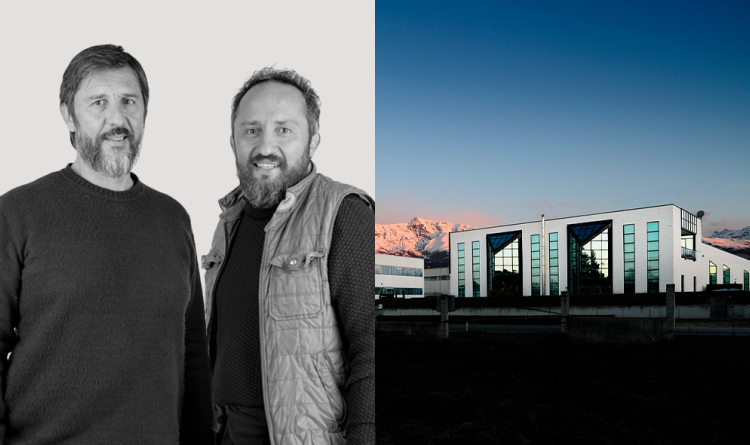
In the heart of the Canavese, among the hills that have given rise to many family-owned businesses, the Space 2000 Group today stands as one of the most dynamic and innovative players in the fashion industry.
A recent highlight is the acquisition of the business unit behind add, the Italian brand that pioneered the lightweight designer down jacket and represents an excellence in outerwear. This industrial operation strengthens the Group’s positioning within the fashion system and marks a strategic step in its evolution.
Driving this growth and shaping it into a fully realized vision is Manuele Musso, the Group’s CEO, together with his brother Cristiano, who have transformed the family business into a global technology platform.
With him, we discuss business, technology, and people — the key pillars of a future that is built day by day.
From Heritage to Innovation
Dr. Musso, the history of the Space 2000 Group is founded on deep family roots. What is the most important lesson you have inherited?
I’ve learned that a company is never just a place of production, but a community. My father founded the business with a very concrete vision of work: creating value as something that endures over time. From him, I inherited the belief that every transformation — even the most technological — must begin with people.
Family-owned companies often find themselves balancing respect for their roots with the push for innovation. How do you find that equilibrium?
There is no formula. I believe that “innovating while staying true to yourself” means being clear about your founding values, yet not being afraid to question them. We have gone through multiple generations, and each time we’ve had to reinvent ourselves: first as manufacturers, then as traders, and today as an Industry 4.0 company.
Technology and Vision
Space 2000 was among the first companies in the sector to adopt RFID for garment traceability. Where did this intuition come from?
As early as 2010, we had sensed that traceability would become a central pillar of the future. We introduced RFID to connect warehouses, stores, and garments automatically, long before it became an industry standard. That decision enabled us to build a scalable, data-driven model without losing flexibility and artisanal quality.
Over the years, you have transformed the company from a traditional manufacturing business into an Industry 4.0 enterprise. What was the turning point?
The real leap came with the complete digitalization of our processes. Over the past eighteen months, we have redesigned all our information systems and digitized the entire supply chain: a new cloud-based ERP, integrated with PLM and data-analytics platforms, now allows us to manage production, logistics, and sales in real time anywhere in the world.
It was a project of major significance, but today we can say that the company is fully connected — and, above all, accessible from anywhere. The newly launched Space 2030 project is born precisely from this idea: after technology and software, the next step is to invest in people, because the real leap is a cultural one.
Sustainability and Responsibility
Producing four times the energy you consume is no small detail. Is it an ethical choice or a strategic one?
I would say it’s about consistency. Sustainability is not a label — it’s efficiency, it’s process intelligence. If you can avoid touching a garment until it ships, you’re already reducing impact and waste. We have a photovoltaic system that makes us self-sufficient, and we are developing real circularity models in which every resource finds a second life.
People and Corporate Culture
The company employs more than 140 people, 80% of whom are women, with an average age of 33. What kind of culture have you built?
I would describe it as a culture of trust. We are a “matriarchal” company in the best sense of the term: concrete, empathetic, determined. Because people always make the difference. Technology is a tool, not an end in itself. Our role is to create the conditions for everyone to express their potential. Technology doesn’t replace intuition — it enhances it. And true sustainability starts here: with people who are trained, aware, and engaged.
We often hear about a “culture of transformation.” What do you mean by that?
It’s not about charity, but about responsibility. We invest in training because we believe that knowledge is the first tool of sustainability. In the project I mentioned earlier, Space 2030, we have created a true “Hub” dedicated to learning and exchange. When a team member grows, the company grows — and so does the community around it.
Territory and Leadership
You are an international company, yet deeply rooted in the Canavese region. What value does this local connection hold today?
A great deal. I believe the future of Italian enterprise depends on its ability to give back value to the places it originated from. We were fortunate to grow here, and we want the people who work with us to feel the same sense of belonging. A territory is not just a physical place — it is an ecosystem of skills and relationships that constantly exchange value.
You are also very active in Confindustria and in industry associations. How important is this commitment “beyond the company” to you?
Very much. It has taught me that a company is not an island. Engaging with other entrepreneurs, as well as with the education and institutional sectors, allows you to look at challenges from a different perspective. Today, the responsibility of those who run a business also includes creating value, fostering talent, and giving back to future generations.
Looking Ahead
In the new creative spaces of Space 2000, an AI assistant coexists with an “Agora” area dedicated to dialogue and exchange. In your view, is this the future of creative work — a continuous interaction between people and artificial intelligence?
Yes, but only as long as technology remains at the service of people. The AI assistant we have introduced is not designed to replace creativity, but to amplify it. It helps us analyze data, anticipate trends, and develop product variations, but the final decision is always human. It is a tool that accelerates thinking — not one that replaces it.
The “Agora,” on the other hand, represents the other side of the same idea: a physical and symbolic space where people meet, exchange views, and inspire one another. After years of forced digitalization, we needed a place that would put people and relationships back at the center. I believe that true innovation is born precisely there — in the continuous dialogue between data and intuition, between algorithms and human sensitivity.
As mentioned at the beginning, the acquisition of the add brand marks an important step in the Group’s strategy. How does this operation fit into your future vision, and what new opportunities does it open for Space 2000?
The acquisition of add is a piece of a broader vision: creating an ecosystem capable of enhancing expertise, technology, and brand identity within a unified, integrated pathway. add brings with it unique technical know-how in outerwear and a product culture that naturally aligns with ours. Integrating it into the Group means enriching our ecosystem with new capabilities and expanding our offering while strengthening our strategic vision.
In the coming months, we will open new offices and a showroom in Milan, which will become the creative and commercial hub for our brands. This is a strategic step because it enables us to be at the heart of the Italian fashion system and to create real synergies between design, sales, and the market, as we work to strengthen our presence in key European markets.
In summary, add is not just a new brand — it is an accelerator of our future vision, a way to grow while staying true to our identity, and a means to continue creating value through the people, technology, and industrial culture that define us.
Looking ahead, what is your personal challenge?
Turning complexity into opportunity. We are living in a time that changes at the speed of technology, but the role of those who lead a company is to give meaning to that change. My goal is for Space 2000 to remain an example of consistency: to innovate without losing its identity.
In one sentence, what does “doing business” mean to you today?
Doing business means successfully bringing an idea to life — turning it into a project and then into reality. It is an act of trust in the future, but also a responsibility toward the people who make it possible.
To the question: “Do you think your father would be proud today of what you and your brother have built?” Manuele Musso takes a moment before answering. Then, with the straightforwardness typical of Canavese culture — made of few words but a great deal of substance — he acknowledges that praise is not given lightly, but that pride is something you can sense in gestures and in the look in someone’s eyes.
And he adds: The last time we organized a company event, my father saw how much the business has grown. Perhaps in his entrepreneurial vision he would have developed it differently, but I believe he felt a sense of pride in recognizing our passion and our commitment to carrying its story forward.
The conversation with Manuele Musso conveys the image of an entrepreneur who brings together vision and pragmatism, roots and future.
His formula seems simple, yet it is anything but obvious: “turning everyday work into vision, and vision into responsibility.”
Ultimately, as Manuele Musso’s entrepreneurial vision suggests, true technology is the kind that gives us back time to be human.